Indian philosophy is often seen through a spiritual lens due to its emphasis on moksha (liberation), karma, and the eternal self. However, a closer examination reveals that Indian philosophical traditions also include rigorous systems of logic, epistemology and rational inquiry. This article explores whether Indian philosophy is primarily spiritual or fundamentally rational by analysing three schools that stand at different points along this spectrum—Samkhya, Mimamsa, and Charvaka.
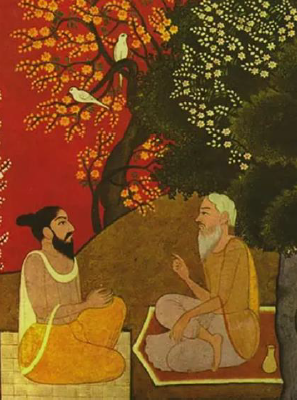
Samkhya, one of the six orthodox (astika) systems, is attributed to the sage Kapila and systematized in the Samkhya Karika by Ishvarakrishna in the 4th century CE. It is a dualist philosophy positing two eternal realities: Purusha (pure consciousness) and Prakriti (primordial matter). Samkhya’s worldview explains the evolution of the universe as the transformation of Prakriti under the passive presence of Purusha. Liberation (kaivalya) is achieved when the Purusha realizes its distinctness from Prakriti.
While its goal is spiritual freeing the self from material entanglements, Samkhya is fundamentally rational in its method. It outlines a system of 25 principles (tattvas) that describe reality and evolution in precise categories. Samkhya accepts three pramanas (means of knowledge)—perception, inference, and verbal testimony—with inference being central. For instance, the existence of Purusha is not accepted through faith but inferred logically as that which remains constant amidst changing experiences. The school's rational method does not appeal to divine authority but relies on systematic categorization and logical explanation.
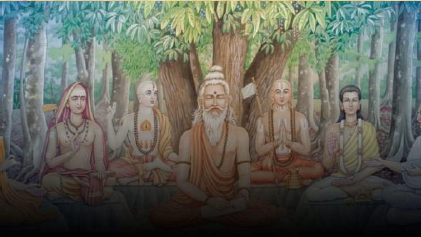
The Purva-Mimamsa school, founded by Jaimini and developed by scholars like Kumarila Bhatta and Prabhakara, focuses on interpreting the ritual portions of the Vedas. For Mimamsakas, the performance of Vedic rituals is not only obligatory but central to maintaining cosmic order. They affirm the Vedas as eternal and authorless, and the concept of dharma as action-based rather than theological.
Mimamsa is deeply rational in its method. It developed an elaborate theory of hermeneutics to resolve conflicts within Vedic texts. Its epistemology includes up to six pramanas (depending on the sub-school), including perception, inference, analogy, postulation, and verbal testimony. An example of its rational rigor is seen in Kumarila Bhatta's Tantravarttika, where he argues against Buddhist ideas of momentariness using complex rules of inference and textual interpretation. Mimamsa thinkers also rejected the idea of God as necessary for moral order, asserting that dharma is intrinsic to the Vedic injunctions themselves. Yet their faith in the ritual system and insistence on performing yajnas reflects a spiritual orientation based on sacred duty.
Charvaka, or Lokayata, represents the heterodox (nastika) strand of Indian philosophy. Often considered the Indian counterpart to Western materialism, Charvaka rejects the Vedas, denies the soul, karma, and afterlife, and focuses entirely on empirical reality. Its doctrines survive mainly through the critiques of rival schools, as original Charvaka texts have been lost.
Charvaka accepts only one pramana: perception (pratyaksha). It rejects inference and verbal testimony as unreliable, especially when used to justify supernatural claims. For instance, Charvakas ridiculed the notion of an invisible soul traveling to an invisible heaven based on scriptural assertion. They asked how anyone could verify such a claim through perception. Ethically, the Charvaka maxim "Yāvat jīvet sukhaṁ jīvet rinam kṛtvā ghṛtaṁ pibet" (As long as you live, live happily; even if you have to borrow money, drink ghee) illustrates their advocacy of material enjoyment over ascetic idealism. Charvaka's strict empiricism and rejection of anything non-material make it the most rational and least spiritual of Indian philosophies.
The three schools represent distinct combinations of rational and spiritual elements:
| School | Spiritual/Religious Emphasis | Rational/Methodological Emphasis |
|---|---|---|
| Samkhya | Strong metaphysical dualism; eternal Purusha; goal of liberation (kaivalya). | Enumerates 25 tattvas; logical inference central; minimal use of scripture. Example: inference for existence of Purusha. |
| Mimamsa | Ritualistic spirituality; eternal Vedas; deities symbolic; focus on dharma. | Textual hermeneutics; logical rules for interpretation; multiple Pramana’s. Example: Kumarila's defence of Vedic dharma without God. |
| Charvaka | No spiritual dimension; denies gods, soul, afterlife, karma, or liberation. | Accepts only perception; rejects inference and scripture; empirical and hedonistic outlook. Example: critique of invisible soul and heaven. |
Indian philosophy is neither exclusively spiritual nor strictly rational; rather, it encompasses both dimensions in varying degrees. Samkhya exemplifies a balance—asserting spiritual liberation through logical structure. Mimamsa shows rational inquiry applied to ritual without reliance on theism. Charvaka, in contrast, represents a purely rational and materialist worldview. These systems collectively demonstrate the diversity and philosophical richness of Indian thought.