I live in the 1st century BCE, a time of resurgence and cultural brilliance in eastern India, under the wise and dynamic rule of King Kharavela of the Mahameghavahana dynasty. Our land, known as Kalinga, stretches from the banks of the Mahanadi to the sea, and is alive with trade, religious fervour, and a deep reverence for the arts. After generations of political turbulence, King Kharavela has brought back prosperity and pride to Kalinga—not through conquest alone, but through a renaissance of economic strength and cultural restoration. The cities of our kingdom bustle with merchants from as far as the northwest and the seas beyond. From Tamralipti port, ships sail to Southeast Asia, bringing back pearls, silk, and stories. Inland, artisans craft bronze, stone, and textiles; farmers cultivate rice, pulses, and sugarcane in fertile plains revived through state-sponsored irrigation.
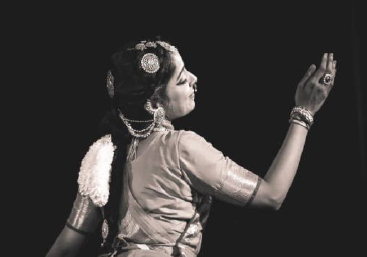
Kalinga’s court and capital at Kalinganagara are not just political centers, but also thriving cultural hubs. It is here that King Kharavela, a ruler equally committed to military strength and moral vision, has restored ancient traditions once lost. His Hathigumpha inscription, etched in stone at Udayagiri, declares how he revived samajas—public cultural assemblies—and reinstated the performance of nata (drama), gīta (song), and vādita (instrumental music), which had fallen silent in previous generations. This was more than patronage—it was a cultural policy that reshaped the life of the kingdom, allowing artists, dancers, musicians, and poets to flourish. His court welcomed not only Jain monks and Brahmin scholars but also performers like me, practitioners of the sacred tradition of Natya.
As a dancer trained in the Natyashastra, my life is one of rigorous discipline, deep devotion, and creative joy. The Natyashastra, composed by the sage Bharatamuni, is more than a performance manual; it is a comprehensive treatise that binds philosophy, aesthetics, psychology, and religious symbolism into the act of performance. It teaches us that drama and dance are divine tools—forms of communication that educate, uplift, and spiritually awaken both performer and viewer. Every step I take, every flicker of my eye is a tool to evoke compassion, heroism, love, or wonder. As Bharatamuni says, "There is no wisdom, no learning, no art, no craft, no action that is not found in drama." This is the guiding light of my life.
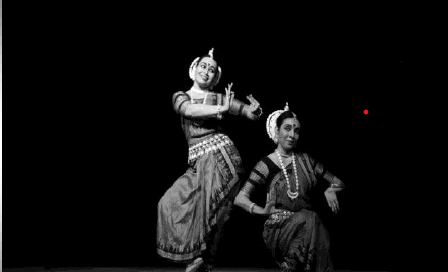
The importance of the Natyashastra in my world is profound. It is not just a guide for dancers and actors—it is a universal text that defines the very purpose of the arts. It provides detailed prescriptions for everything: stage construction, musical scales, rhythmic patterns (talas), make-up, costuming, audience etiquette, and the moral responsibilities of performers. It presents the four types of abhinaya—angika (physical movement), vachika (speech), aharya (costume and adornment), and sattvika (inner emotion)—as the framework through which a performance acquires life. Most crucially, it introduces the doctrine of rasa—the essence or flavour of human emotion that is awakened in the audience. Through my performance, when I express karuna (compassion) or shṛṅgāra (love), I am not merely acting—I am leading the audience into an emotional and spiritual experience. The Natyashastra makes our art deeply purposeful—it becomes a mirror of life, a tool for instruction, a method of healing, and above all, a means of realizing the truth.
My day begins at the temple, where I offer my first performance not to an audience, but to the divine. In Kalinga, temples are not just places of worship—they are cultural institutions. The Rani Gumpha cave at Udayagiri, carved under royal patronage, holds sculptural panels that mirror our world: dancers’ mid-motion, musicians playing drums and flutes, and audiences caught in rapt attention. These are not mythic images alone—they reflect the lived experience of temple rituals, royal court festivities, and seasonal festivals where Natya is woven into the spiritual and public life of the people. I am both a devotee and an educator—through dance, I retell the epics, teach dharma, and give voice to the emotions of the gods and the people alike.
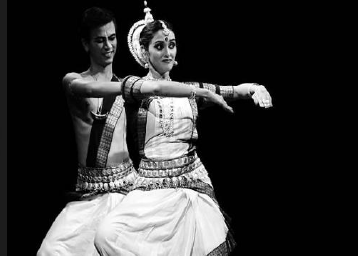
At times, I am invited to perform at the royal court. There, in the presence of King Kharavela, my art is both honoured and judged. He is a ruler with a connoisseur’s mind—his inscription tells of how he brought back musical festivals, patronized artists, and built theatres for performance. His court resounds with dialogue, rhythm, and rasa, and I feel proud to live in an age where a king sees a dancer not as entertainment, but as an upholder of knowledge and sacred tradition. His cultural policy, like his military campaigns and economic reforms, reflects a ruler who saw civilization not as bricks and borders, but as spirit and expression. Socially, I occupy a unique position. While caste and gender define many lives, the performing arts allow a different kind of mobility. As a female artist, I am trained, respected, and even envied. In temples, I serve as a nartaki, a ritual specialist; in courts, I am a symbol of cultural refinement. My interaction with society is layered—I am part of guilds of performers, I work with musicians, poets, and sutradharas (stage managers), and I teach younger students in our community. We live not in isolation, but in deep conversation with the world around us. Our performances are public, and so are our responsibilities: we are cultural transmitters, carrying history, morality, and emotion across generations.
Kalinga under Kharavela is not just a powerful kingdom—it is a civilization in motion. The economy flourishes with trade, agriculture, and craft production; society pulses with debate, ritual, and creativity; and the arts thrive with royal, religious, and popular support. In this world, the Natyashastra is not a dusty text—it is a living pulse, a guide for how we live, feel, and express.