They say Pataliputra was the crown of the East. That its markets hummed with the music of trade, and pillars rose tall with the Emperor’s words carved into stone—words of peace, justice, and Dhamma. But not all voices were carved in stone.
Some—like mine—were lost in kitchen smoke and silent corridors.
I was one such voice. A girl born free, but forgotten as a name.
My name… no one remembers it anymore.
Once, my mother used to call me Shailee. But that name faded long ago, like dust washed away by the Ganges. Since then, I’ve been just “a slave.” A breathing, walking slave. I wasn’t born a slave. But one monsoon morning, I was taken like harvest grain—plucked from my mother’s arms and dragged into a world where my voice didn’t matter. They renamed me Daasi, and erased everything else about me.
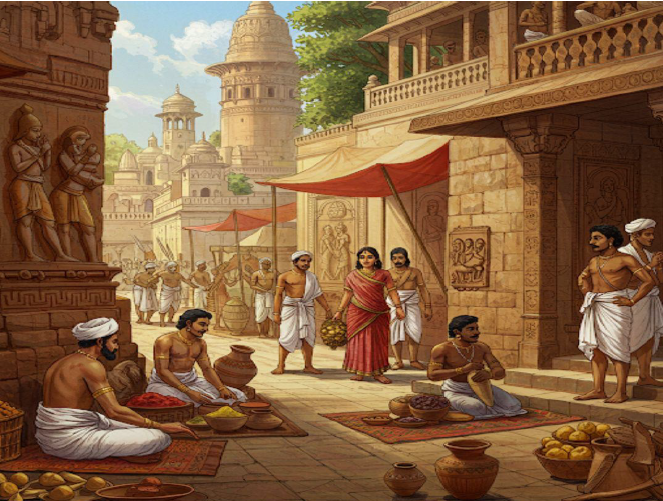
I was born in a small village near the Ganges, in the vast kingdom of Magadha. My father was a landless labourer, my mother a healer—mixing herbs and prayers to ease the village’s aches.
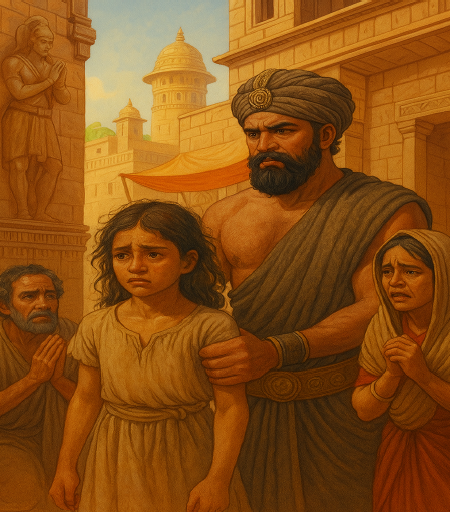
We were Shudras—the lowest rung of society. We owned nothing, not even dignity. Yet we had a home, warm meals on some nights, and the freedom to laugh beneath the open sky. But that life ended one monsoon evening. Royal tax collectors came, demanding dues. We had nothing left to give—no grain, no silver, not even cattle. My father begged. My mother wept. And so, they took me. Bartered like grain. Dragged into a world I didn’t understand.
I was brought to Pataliputra—the heart of the Mauryan Empire. They said it was a city of splendor. But to me, it smelled of sweat, smoke, and servitude. The air wasn’t gold—it was thick with commands. I served in the house of a tax collector—first in the kitchens, then in the women’s quarters. My hands cooked meals I never tasted. My feet ran across corridors where I was forbidden to rest. I scrubbed floors, washed utensils, and kept my head bowed. I was told not to speak unless spoken to.I learned silence. I learned how to cry without sound. I learned quickly: obedience was survival. I became invisible unless needed.
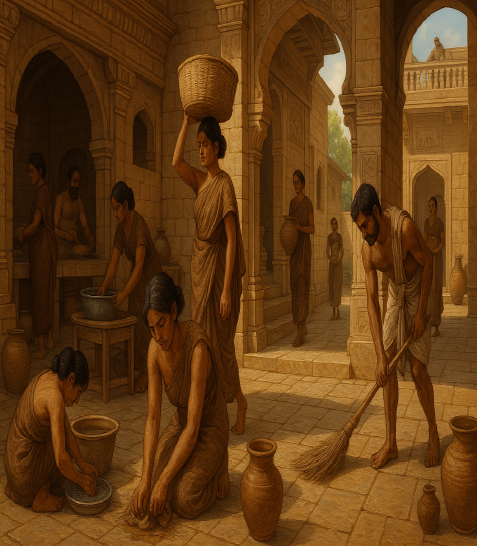
I watched the world from the margins.
Brahmins walked with pride, sacred threads across their chests, chanting mantras that rose like incense into the skies.
Kshatriyas, draped in fine garments, their swords glinting in the sun, judged men with a single glance.
Vaishyas counted coins, spoke of distant trade routes, and calculated their profits—silk from the west, salt from the shores.
And us ?
We were invisible. We served, we suffered, we waited. Even among slaves, there were divisions. Foreign slaves—Yavanas, Kambojas—were sometimes treated better, admired for their exoticness, used for diplomacy or entertainment.
But a girl like me?
I was nothing but a reminder of the caste system’s cruelty. I couldn’t touch certain vessels. I couldn’t sit where others did. Even among the broken, I was the lowest.
I looked at my cracked hands and wondered—if the Buddha himself walked by, would he even see me?
After the Kalinga war, they said the Emperor had changed. Ashoka, once a ruthless conqueror, became Dhammashoka, the preacher of kindness and non-violence. They spoke of roads lined with trees, wells dug for thirsty travelers, and edicts that declared, "All beings deserve compassion." And perhaps, I did feel a faint breeze of change. The beatings became fewer. The cruelty, less visible. Once, a monk gave us leftover rice with a smile. Once, someone whispered, “Even a slave has a soul.” That night, I wept—not from sorrow, but from the strange warmth of being seen.
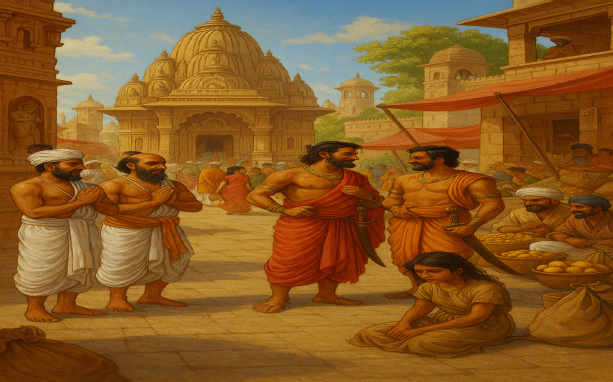
But I learned quickly: Empires speak loudly, but they don’t always listen.
The next morning, I was beaten for dropping a water jug.
We were still slaves. No royal edict loosened our chains. The world bowed before Ashoka’s pillars of Dhamma, but we still knelt on cold floors. Change had begun, perhaps, but mercy came slowly—and unevenly.
What were my joys in that life of dust and obedience? A stolen bite of jaggery. The feel of cool mud between my fingers. A mango, quietly plucked from the garden. The soft hum of a village lullaby while grinding grain—my only rebellion. Sometimes, a kind glance from another maid, or the silent understanding in a fellow slave’s eyes, felt like freedom.On rare festival days, the scent of jasmine filled the air, reminding me of a life that was once mine. And in the quiet of the night, beneath the watching moon, I would cup my hands to my mouth, whisper my real name into the dark, just to hear it alive again. I would look at the stars and imagine my village, hum forgotten songs, and dream.Dream of being free. Of being loved. Of having a name that someone, somewhere, still remembered.
History remembers kings and their conquests—Ashoka’s remorse carved in stone, his Dhamma spreading across the empire. But I, too, was part of that story. A quiet heartbeat in the vast body of the Mauryan Empire. A girl who scrubbed royal floors while the world outside read of virtue and compassion. I was a slave. But I was not without thoughts. Not without hunger—not just for food, but for dignity. I had dreams—small ones, fragile ones, but mine. They wrote history in stone. I lived it in silence. And if you ever walk through the ruins of Pataliputra, pause for a moment. Maybe in the crack of a pillar, or in the hush of the wind, you’ll hear me—maybe not my voice but my breath,my pain,and my quiet hopes perhaps still echoing beneath the ancient stones of forgotten Pataliputra.