Jharkhand, endowed with immense mineral wealth, has long been recognized as a pivotal region in India's mining history. Among its vast natural resources, uranium stands out due to its strategic importance in India’s nuclear energy program. The story of uranium mining in this region is not merely an industrial narrative but a complex interplay of colonial legacies, scientific discovery, state policy, tribal displacement, and environmental transformations. This article delves into the historical trajectory of uranium mining in Jharkhand, tracing its evolution from colonial geological surveys to its critical role in independent India’s atomic ambitions.
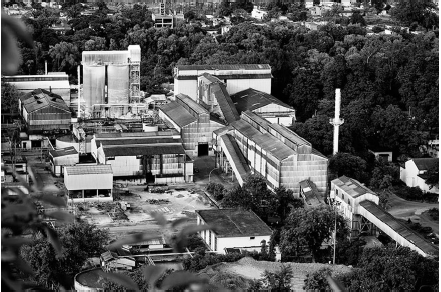
Though uranium was not actively extracted during the British colonial period, the groundwork for future exploration was laid through extensive geological mapping of the Chotanagpur plateau. British geologists in the late 19th and early 20th centuries conducted mineral surveys that emphasized the potential of the Singhbhum district. These surveys, aimed primarily at mapping copper and other industrial minerals, unwittingly identified radioactive anomalies, which would gain significance only in the post-independence context. The systematic approach to geological exploration established by the British would later assist Indian geologists in pinpointing uranium-bearing regions.
The real breakthrough in uranium mining came after independence when India began charting its path toward nuclear self-reliance. In 1951, the Geological Survey of India confirmed the presence of uranium deposits in the Singhbhum Thrust Belt of eastern Jharkhand, particularly in Jaduguda. This led to the formation of the Atomic Minerals Directorate for Exploration and Research (AMD), under the Department of Atomic Energy (DAE), which took charge of prospecting and evaluation..
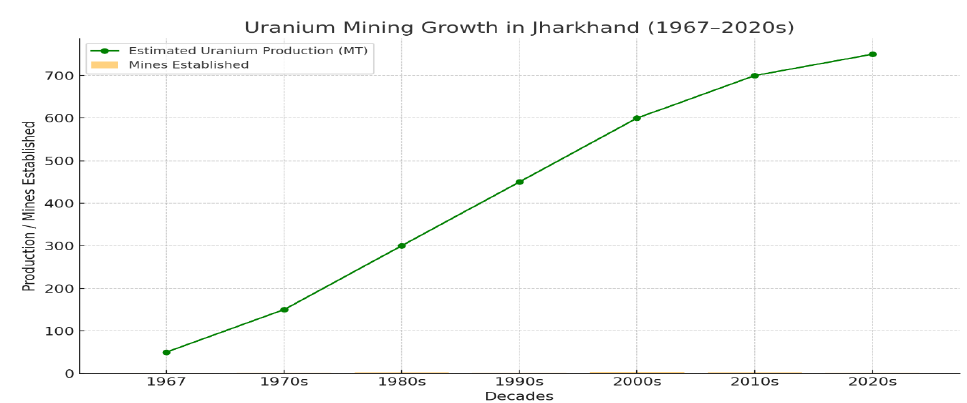
By 1967, the Uranium Corporation of India Limited (UCIL) was established with its headquarters at Jaduguda, marking the beginning of organized uranium extraction in the country. The commissioning of the Jaduguda Uranium Mill in 1968 not only made Jharkhand the centre of India’s uranium production but also placed it at the heart of the nation’s nuclear infrastructure development.
Over time, new mines were opened in nearby areas such as Bhatin, Narwapahar, Turamdih, Banduhurang, and Mohuldih. These expansions were driven by the growing needs of India's civilian nuclear program and strategic defence goals. Unlike the colonial emphasis on export and profit, the post-independence uranium operations were state-controlled, framed as part of national development. However, the operational models borrowed heavily from colonial precedents in their neglect of environmental and tribal welfare considerations.
The tribal communities of the region primarily the Santhals, Ho, and Munda were among the earliest settlers in these forested zones. The incursion of mining disrupted their traditional livelihoods, leading to large-scale displacement, loss of agricultural lands, and cultural disintegration. Although the government instituted rehabilitation policies, these were often poorly implemented and failed to address long-term socio-economic impacts. Many tribal families were moved to resettlement colonies with limited access to water, health care, and education, causing a deep sense of alienation and marginalization.
The environmental costs of uranium mining have been immense. The radioactive waste from uranium mills, usually stored in tailing ponds, has been a major concern due to leakage risks, groundwater contamination, and radioactive dust exposure. Numerous studies have reported increased cases of congenital diseases, cancer, and reproductive health issues among communities living around Jaduguda. The lack of effective regulatory oversight and the secrecy surrounding nuclear operations exacerbated public health crises. Despite protests and demands for environmental justice, uranium mining continued with minimal reform.
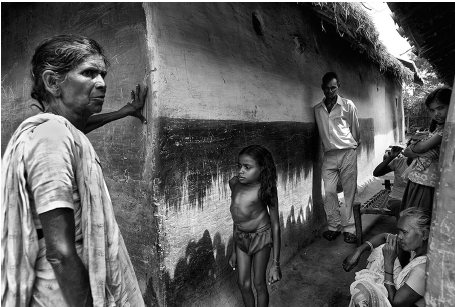
The government and UCIL’s formal land acquisition and rehabilitation policies including provisions under the Land Acquisition Act (1894) and its successor, the Right to Fair Compensation and Transparency in Land Acquisition, Rehabilitation and Resettlement Act (2013) stipulate fair compensation, housing, jobs, and amenities for project-affected families. In practice, however, the outcomes have been deeply unequal. A 2018 study of 411 displaced tribal households near Turamdih revealed that while 96% lost land or homes as a result of displacement, only 52% received any cash compensation most within the range of ₹6,000 to ₹30,000, with just 2.3% receiving above ₹60,000. Employment promises were only marginally fulfilled: approximately 38% of displaced households had a member employed in some form by UCIL, often in low-skill, insecure roles. This compensation distribution was overwhelmingly decided by company authorities (91.6%) rather than negotiated with landowners. Meanwhile, public hearings, intended as a safeguard under the Environmental Protection Act (1986), were often staged in guarded venues with limited tribal participation, sometimes dominated by UCIL-aligned interests. Although UCIL claims to monitor radiation, air, and water quality via BARC’s Health Physics Units and asserts no significant environmental or health impacts, independent investigations paint a different picture. A health survey by the International Physicians for Prevention of Nuclear War (IPPNW) found that residents near Jaduguda had 1.58 times higher rates of sterility and nearly double the incidence of congenital deformities (4.49% vs. 2.49%) compared to reference villages figures that contradict official assurances and underline the stark gap between policy intent and lived consequences.
The history of uranium mining in Jharkhand, especially in regions like Jaduguda, Turamdih, Narwapahar, and Bhatin, represents a complex interplay of national energy needs, state-led development narratives, and the rights of indigenous communities. While uranium has been a strategic resource for India's nuclear program, the process of its extraction has imposed disproportionate costs on the local tribal population in the form of land alienation, environmental degradation, loss of livelihood, and health hazards. Government policies and UCIL’s compensation mechanisms have often failed to bridge the gap between displacement and dignified rehabilitation, leading to a sense of betrayal and persistent socio-economic marginalization among the affected communities. Data from both official and independent sources indicate a deep disjunction between policy promises and on-ground realities. The lack of transparent governance, insufficient public participation, and the underestimation of environmental and health impacts raise serious concerns about the sustainability and ethical dimensions of such mining operations. Moving forward, a rights-based, ecologically sensitive, and community-informed framework must be adopted to ensure that development does not come at the cost of justice and human dignity.