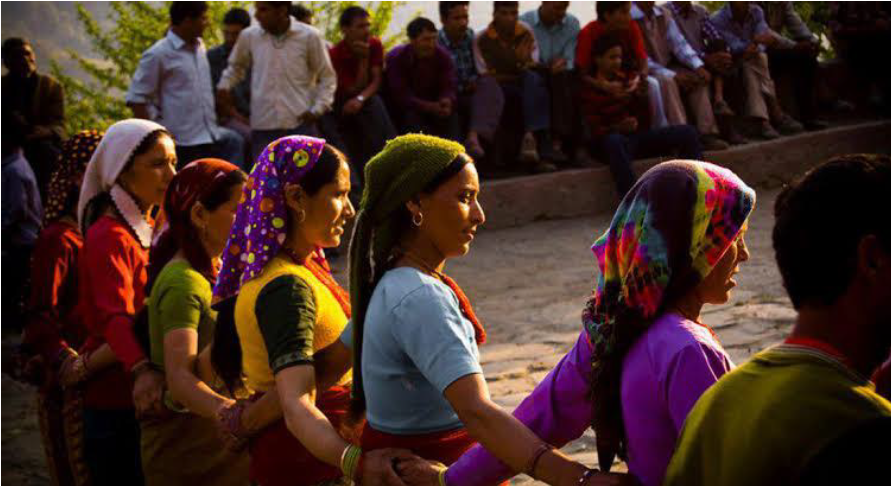
The physical geography of the state of Uttarakhand-which is popularly known as the Land of the gods (Dev Bhoomi) forms not only a physical heritage but also an intangible heritage site. Located in such sacred geography is a vast oral tradition where history, myth, ecology and gender rub shoulders in a vibrant interchange. A magnitude in the middle presents the realities of the women of Uttarakhand: as guardians of folk memory, cultural survival, and environmental knowledge. The paper at hand thus explores the nature of oral genres, i.e. the most prominent folk songs, Jagars, and narratives, such as that of Rajula-Malushahi, that express the voices of women, their fights, and access to power, as well as the ways in which these very traditions are threatened by the current state of digitalization, modernization, and the ecological change.
The Uttarakhandi folk literature (Jagars, Jhoda- Chanchari, and Lok kathayein) is not only a form of entertainment but also a socio-religious practice, a vehicle of historical knowledge and a source of environmental as well as gendered knowledge. In Garhwal and Kumaon, the women have traditionally played the most important role of keeping these oral forms, alive.
The work by Pallavi Negi proves that women are not merely decorum in the stories, they are the makers, actors and conveyors. It is women who are actively building a living memory in song in the fields, in reciting epics at communal gatherings, or a conjuration of spirits in Jagars.
These modernizing technologies, development projects (along with modifications in environmental situations) all threaten the oral traditions of Uttarakhand. However, local movements, such as the organization of oral tradition groups, local publications and festivals have proved central to the documentation, renewal, and preservation of these forms of art.
Jagar, a shamanic ceremony held in Uttarakhand, uses sound-invoking music and dramatized speech to call to gods. The ritual singer, the Jagariya, is usually male but the Jagar tales have a moral and emotional center-stage that rests with women.
Think of the Jagar of Kush-Bhairav which theatrically portrays fraternal faithfulness and deception. The story line revolves around the judgement of the wife who causes movement of the karmic plot in the play. Similarly, injustice and the family-tension are the themes celebrated by the Jagar of Goril Devta, where feminine emotionality is firmly rooted.
Women in these songs by no means represent victims of pain, instead they act as moral agents asserting or neglecting cosmic order. In such a way, they undermine passive stereotypes that exist in classical literature even among Sanskrit and open symbolic spaces of opposition.
One of the best known folk epics in Uttarakhand is the Rajula-Malushahi, a lyric romance of Katyuri period. Rajula who is a daughter of a trader is engaged as a child to Malushahi who is a prince. Going against the will of her father, she takes a very dangerous trip to see her man once again. Her agency stands out in the narrative: she travels unaccompanied around the forest and meets sages and magic beings, and fights against social demands.
The tale is a crystallization of a cultural memory where independence among women is not crushed but rather a celebrated one. In sharp contrast to the passive depiction of other people, like Sita in the later classical versions, Rajula is an actor of fate. In folk memory, she is a kind of proto-feminist symbol of defiance, love, and choice.
The females of Uttarakhand show very interesting, multi-dimensional relations with their natural environment and this has been recorded in their folk narrations and the practices. Folk songs always portray women as protectors of forests, mourners of the drying streams and parents of life. These stories are not mere allegories but give cultural base to such tangible mass movements as the Chipko Andolan where women hugged the trees in order to prevent deforestation.
When the Uttarakhand folk literature is grouped into an ecofeminist perspective, one can find out that there is a certain trend in the way in which women and nature are exploited. In the name of owning the forests, women were turned into observers as the forest-related jobs of collecting fodder, fuelwood and herbs, were redefined as traditional during colonial rule without any knowledge of the fact that earlier this was once the responsibility of both women and men. The outcome of this reclassification was that women were invisible, quasi-domestic workers and were the ones whose environmental knowledge was repressed.
Yet in folktales themselves this erasure is opposed. The stories of forest goddesses, the accounts of changes in seasons, the songs of migration wailing kept the memory of ecology alive and were sophisticated criticisms of patriarchy and colonialism.
Migration is a recurrent trend in the Uttarakhand hills, but it reached its climax by the time of British rule. Fracchia notices that colonial policies of labour channeled men into wage work in far away cities and left women to deal with housekeeping, forest, and provide emotional support. The subsequent viraha (separation) songs, which are still performed both in context of everyday activities and of festive occasions, document the emotional labour of women. These writings are not just about the absence, they re-writings of absence as survival and, sometimes as the resistance. The main character waits, but she also doubts, thinks, remembers and instructs.
Under this regard, the songs will serve the mnemonic task and the analyzing task where, the strength of the women is acknowledged in the songs but indirectly, the socio-economic systems which perpetuate their marginalisation, is also criticised.
The past few years have witnessed a two-faceted aspect of digital platforms to the preservation of folk literature. Videos in YouTube, Instagram reels and WhatsApp have promoted Uttarakhandi folk songs making them approachable to their young generations and even diasporas. Artists like Meena Rana have been recognized as cultural figures as they have remixed folk stories to those who could listen to them in modern times. However, the digital turn threatens to do just that; to put such context and complexity of these traditions through a flattening process. The brevity that makes a song viral simplifies or streamlines them, the entertainment value in the form of dramatic storytelling is applied to traditional tales, and communal, participatory nature of folk tradition is replaced by consumption.
However, with such reinterpretations, opportunities exist as well. They allow feminist rewritings of outdated stories, create job markets for female actors, and draw renewed attention to threatened oral traditions.
There is the more secret area of domestic spirituality beyond the performance of songs and stories in the streets. Some studies indicate that women play the important role of controlling home altars, ritual cycles, and inter-generational memory. Morning pujas (ritual of worshipping Gods), seasonal fasting and narration around wood-fires are still the main content of family life in rural Uttarakhand even nowadays.
These are potent spaces and yet they are typified by privacy. They are not only places of worship but also of conservation, of existence, of values, language, gender roles, and memory of the ancestor. As providers of the ritual, women are extremely useful in the fact that they create continuity of the culture through their everyday activities, a continuity that would otherwise perish.
In the oral customs of Uttarakhand, women do not sit calmly as the keepers of the tradition; they are assertive tellers of the times, feelings and their survival pasts. Songs, tales, rituals, and the intelligence of ecofeminism have made it possible to maintain a cultural memory that the colonialism, patriarchy, and modernization were trying to remake or cover up.
Nowadays, thanks to digitalization, there is hope and warning because of the new channels of dissemination. The major challenge of the researchers, artists, and communities is to support the organicity of oral traditions without violating them. Feminist readings, ecological activism and cultural policy have to join forces to sustain the distinctive voices from the hills, a voice which keeps on asking, resisting and remembering.