Sita of the Ramayana holds a rather fraught space in the world literary heritage. Centuries revered as the embodiment of feminine virtue devotion, purity, patience, she has served in various areas of Hindu culture as a cultural model. However, underneath the canonical icon, her story has been rearticulated in some of the voices that express sorrow, protest and subdued defiance. This split between who she is in Sanskrit epic literature and who she sounds in local people traditions suggests a major shift in the way of thinking about her: wife, of course, but also a subject with a will to act and ability, some level of dignity, and conscience.
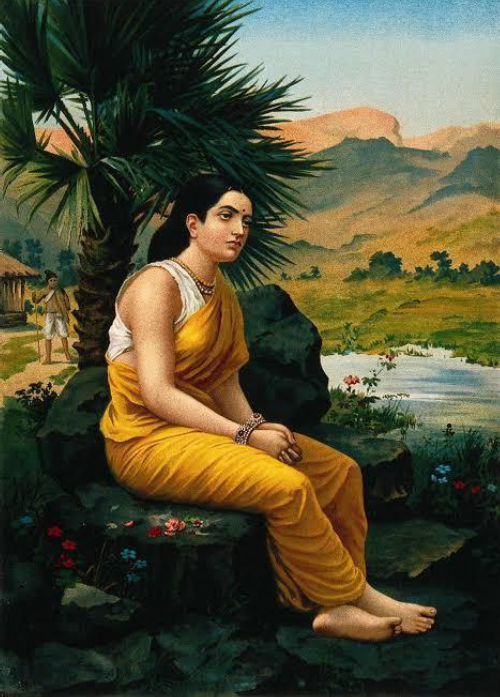
In the Valmiki Ramayana, which is dated to approximately 200 B.C.E, Sita is portrayed nearly entirely in terms of dharma: a perfect wife, who must be loyal and silent. She follows Rama to exile and gets kidnapped by Ravana and proves her purity through a fire ordeal only to be sent to exile once again due to the mistrust of the people. Despite the scenes of emotional peaks, particularly when Sita makes a sarcastic retort to the unswervingness when Rama refuses to go with her to the forest, her ethical journey is choreographed according to patient endurance, not by disobedience. She is sanctified with a muted voice. Her pain in this reading actually supports rather than competes with Rama glory.
Yet further the structure of the ordeal of Sita is worked out in Ramcharitmanas, the great regional Awadhi epic of Tulsidas, done a millennium and a half after Valmiki. Her tribulations in this text acquire blatantly religious dimensions: the personal sufferings of Sita is supplanted by an allegorical overlay in which Sita becomes the incarnation of goddess Lakshmi in disguise. Her human nature of responding is lost in preference to this symbolic nature, and that destroys her emotional agency; her silence, consequently, becomes an instrument to devotional idealism and ceases to be an independent expression of her agency.
However the story of Sita is not limited to these preachy epic forms. Her name has been re-formed in various folk forms in rural India, ranging in voice, song, ballad and even hand-painted scroll, circulating in and created by oral traditions of women. These popular interpretations challenge the assumption that ethical paradigmatics involves voicelessness through the provision of Sita with actual speech acts, questions, and even direct denials. These are among the most notable of the derivatives, including the 16th-century Bengal Ramayan by Chandrabati that deliberately reverses the canonical order to place Sita at the centre stage. In the reworking by Chandrabati, warfare and intervention of gods take a back stage with the story of Sita being on the front row. Her character has been projected as a victim of love and a victim of the ideals and ideals-of-efforts she has lived and now she cries in front of the Sakhijana, peer women with whom she imparts the tragedy and records her sorrow. The purpose served by this strategy is to make the divine recognizably human, a goddess a bereaved woman, and mythic narrative one touched by experience and sharing.
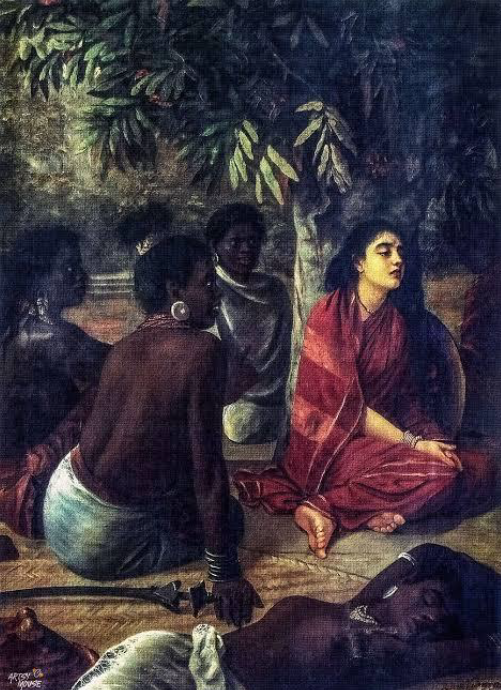
Local folk heritage plays a role of anti-tale to the canonical Sita story, placing the episode in a different perspective, with the focus on Sita as a self-governing and vocal character. In the second ones, Sita recognizes the arrival of Rama and is willing to go with him by herself gaining strategic agency. Her emotional intelligence is highlighted: at hand, when she is ordered to come back, she exhibits fake desperation thus forcing Rama to change his mind. Instead of dharma playing an overriding role, these adaptations emphasize Sita, her conscious thought process, and self will.
Such a recasting is seen throughout Bhojpuri folk songs and Bengal Patua scroll traditions in which Sita herself rejects repatriation. She tries to fight the rakshasi Trijata, argues, raves, and mourns. Such versions give the value of pain of Sita, and the voice of women who saw themselves in Sita- walking and carrying water, supporting, and feeding families, taking the abuses and sarcastically kept their dignity.
These changes are typical of the folkloric impulse, not to glorify, to humanize. Sita in these stories is not a symbol of divinity or a part of Rama story she is a straight snorter of male dominance. Her denial becomes recreated in a form of the statement of dignity instead of the negligence of the duty, and she reveals to be the hero of her own shining story.
It has been argued in previous literature that the opposite folkloric and regional adaptations of the Ramayana are not merely functional on the level of narrative but disruptive as well questioning what it is that the canonical text value-wise has to offer. In the edited collection Many Ramayanas, Paula Richman has defended the argument that these alternate versions viz.; the telling of Ramayana by Chandrabati and those enacted in villages form a continuous cultural negotiation. Such stories are not just stylistic variations but textual emanations produced by subordinated groups to subordinated audiences. Within these contexts, Sita does not only act as a literary character but as a cultural actor taking first place the idea that reinterpretation is already a form of resistance.
A recontextualization of the role of Sita in the Ramayana using an emotional and ethical imagery can shed light into how myth disclosure changes in accordance to modern day experiences. In the text of the Sanskrit canonical source, the concept of power is based on the cosmic order; rather, vernacular versions stimulate the moral candor and psychological affinity. In such popular adaptations, Sita has a right to question her husband, to complain about being exiled, to demand reconciliation not on conditions that she remains silent. The voice and feeling of women is authentic due to the fact that she has the right to express grief and protect her rights.
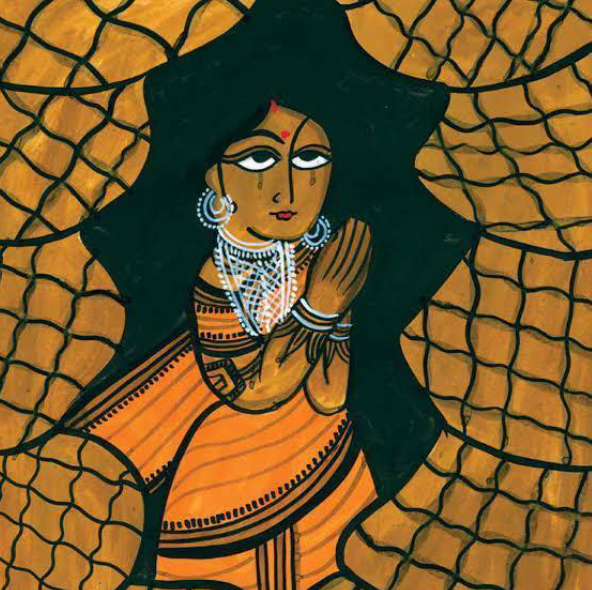
The adaptation done by Chandrabati is not canonized, but it should be acknowledged by scholars because it undermines the very script which relies on the idea of Conquest and proposes a newdetermination of heroism, founded on Contience instead. The very nature of the work as being on the fringes of conventional power is the reason why it has the bandwidth now to become an act of critique as well, a counter currently in the gender norms inherent in the accredited Ramayana.
These folk stories come at the right time when there are numerous outcries in society toward justice and gender equality. They prove that mythology is not fixed: it is re-interpretable, mutable, and re-appropriable. As they are retold in the present circulation, each of the stories offers the discursive context where women who have been the subject of abandonment, silencing, or judgement can become affirmative of their own existence.
After all, the contrast between Sanskrit and folk imagery is not at the literary level; it is a way of expressing the unequivocally human opposition. The traditional Sita enjoys being a faithful practitioner of dharma by submitting in silence, but the popular Sita disagrees based on the condition that she knows she was conceived of her value. Her refusal, however, is decisive and serves as the retrieval of agency among all women along with the rearticulation of the story.